Professional one stop aluminum solution manufacture for your villas and apartments
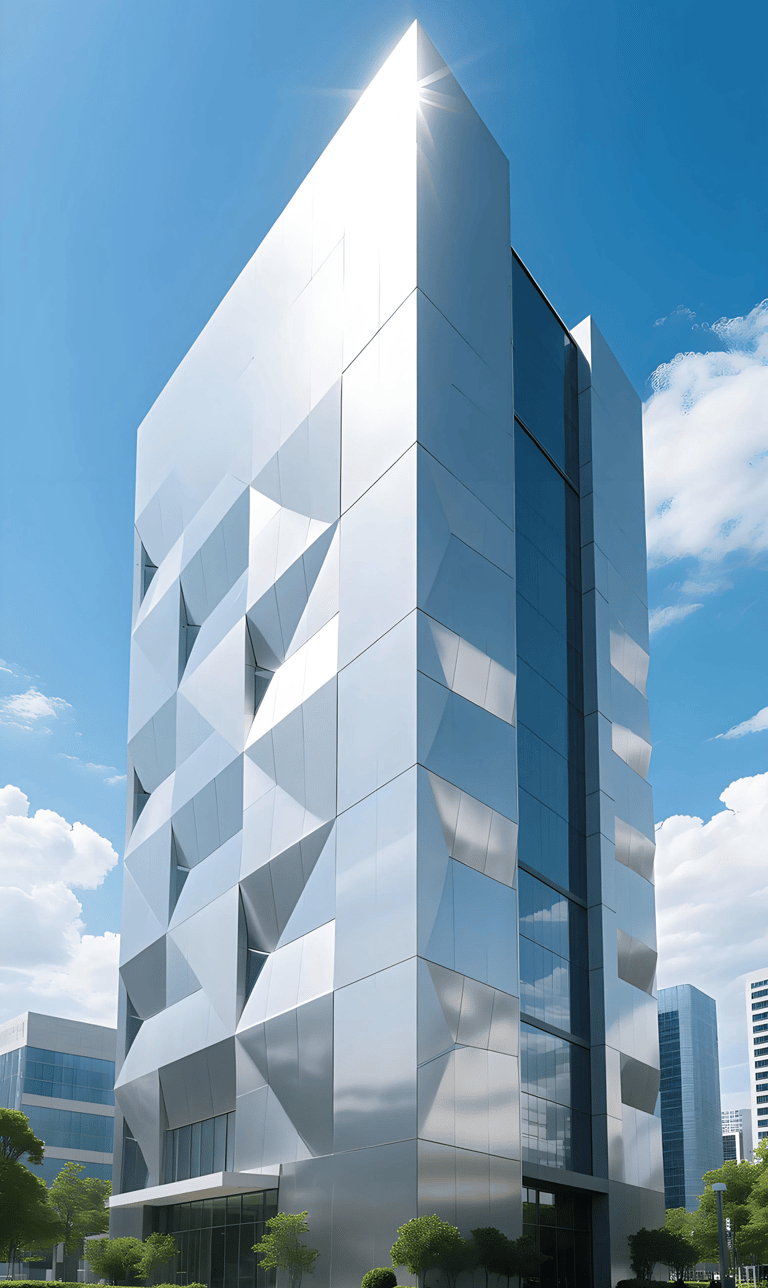
Aluminum/ACP Panel Cladding Curtain Wall
We have both solid aluminum panels and aluminum composit panels(ACP) solutions to meet different budgets.
Expert Architecture Services
Our experienced architects provide personalized design solutions that turn your dreams into reality.
1. Aluminum panel curtain walls offer excellent rigidity, lightweight construction, and high strength. Aluminum single-panel curtain wall panels exhibit good corrosion resistance, and fluorocarbon paint can maintain its color for up to 25 years.
2. Aluminum panel curtain walls offer excellent processability. Utilizing a pre-processing and post-painting process, aluminum panels can be shaped into various complex geometric forms, including flat, curved, and spherical surfaces.
3. Aluminum panel curtain walls are resistant to staining and easy to clean and maintain. The non-adhesive nature of the fluorocarbon coating makes it difficult for contaminants to adhere to the surface, resulting in excellent self-cleaning properties.
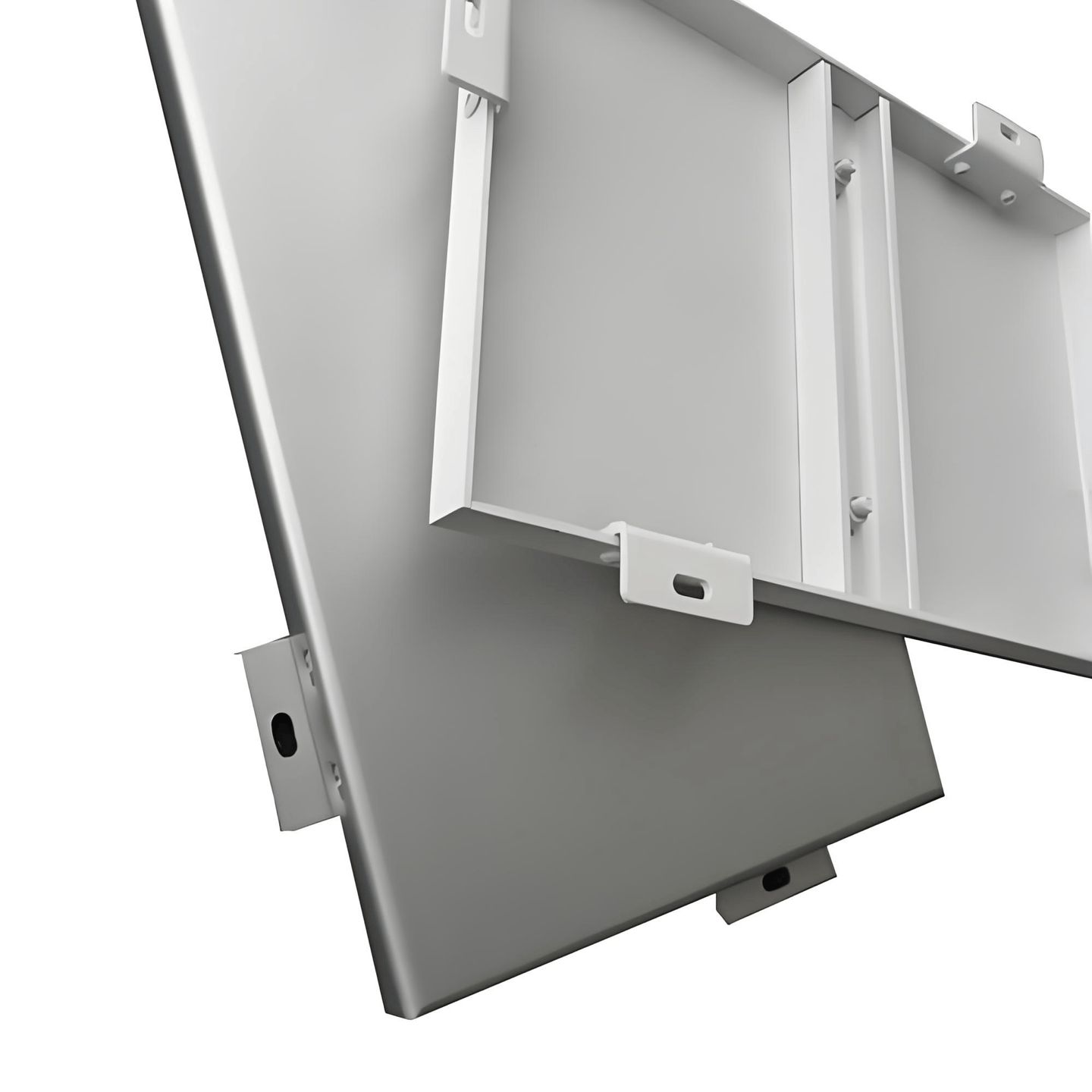
4. Aluminum panel curtain walls offer convenient and quick installation. Aluminum panels are pre-formed in the factory, requiring only simple fixing on-site without the need for cutting.
5. Aluminum panel curtain walls are recyclable and environmentally friendly. Aluminum panels are 100% recyclable, offering even higher recycling value.
Aluminum panel curtain walls possess a unique texture, rich and durable colors, and diverse shapes, and can be perfectly combined with glass and stone curtain wall materials. Its perfect appearance and excellent quality make it highly favored by owners. Its light weight, only one-fifth that of marble and one-third that of glass curtain walls, significantly reduces the load on the building structure and foundation. Furthermore, it has low maintenance costs and a high performance-to-price ratio.
Currently, the vast majority of aluminum panel curtain walls used globally are composite aluminum panels and single-panel aluminum alloy panels.
Composite aluminum panels consist of two layers of 0.5mm pure aluminum sheets (0.2-0.25mm for indoor use) with a 3-4mm thick polyethylene (PE or PVC) sandwiched in between, formed by roll pressing and heat sealing. The product is a flat panel of a certain size, such as 1220mm × 2440mm. The fluorocarbon paint on the surface of the exterior composite aluminum panel is also applied by roller coating, pressing, and heat sealing in one step. The coating thickness is generally around 20 μm. The advantages of composite aluminum panels are their lightweight, smooth surface, good flatness, no color difference in the same direction, and excellent on-site processing capabilities. This provides conditions for handling dimensional changes in exterior walls caused by on-site construction errors, reducing workshop processing cycles, and shortening installation time.
During installation, the composite aluminum panels need to be processed into wall panels. First, the panels are cut according to the dimensions of the secondary design. The cutting process must take into account the allowance for folding edges, generally adding about 30mm on each side. According to curtain wall installation companies, the yield rate of the cut panels is generally 60%–70%. The cut composite panels need to be grooved on all four sides, meaning a certain width of the inner aluminum and plastic layers is cut away, leaving only a 0.5mm thick outer aluminum layer. Then, the edges are folded to 90-degree external angles. A sub-frame of the same size is then made from aluminum profiles and placed within the grooved aluminum composite panel. The bottom of the sub-frame is bonded to the back of the aluminum composite panel with structural adhesive. The folded four sides are fixed to the outside of the sub-frame using riveting. The sub-frame usually also has reinforcing ribs in the middle to ensure the mechanical strength of the wall panel. These reinforcing ribs are made of aluminum and bonded with structural adhesive. Some non-standard practices only add corner aluminum for fixing at the four corners of the composite panel, and use double-sided tape to bond the reinforcing ribs, which significantly reduces their strength.
Aluminum alloy single panels are generally 2-4mm thick aluminum alloy sheets. When making them into wall panels, sheet metal processing is first performed according to the secondary design requirements, with direct folding. The four corners are high-pressure welded into a tight groove shape. The back of the wall panel is pre-installed with bolts for fixing the reinforcing ribs using electric welding. After the sheet metal work is completed, fluorocarbon paint is applied, usually in two or three coats, with a film thickness of 30-40μm. Aluminum alloy panels are easy to process into curved shapes and multi-folded edges or sharp angles, which can meet the ever-changing needs of today's exterior wall decoration. Moreover, they are available in a variety of colors, which can be selected according to the design and the owner's requirements, truly expanding the design space for architects.
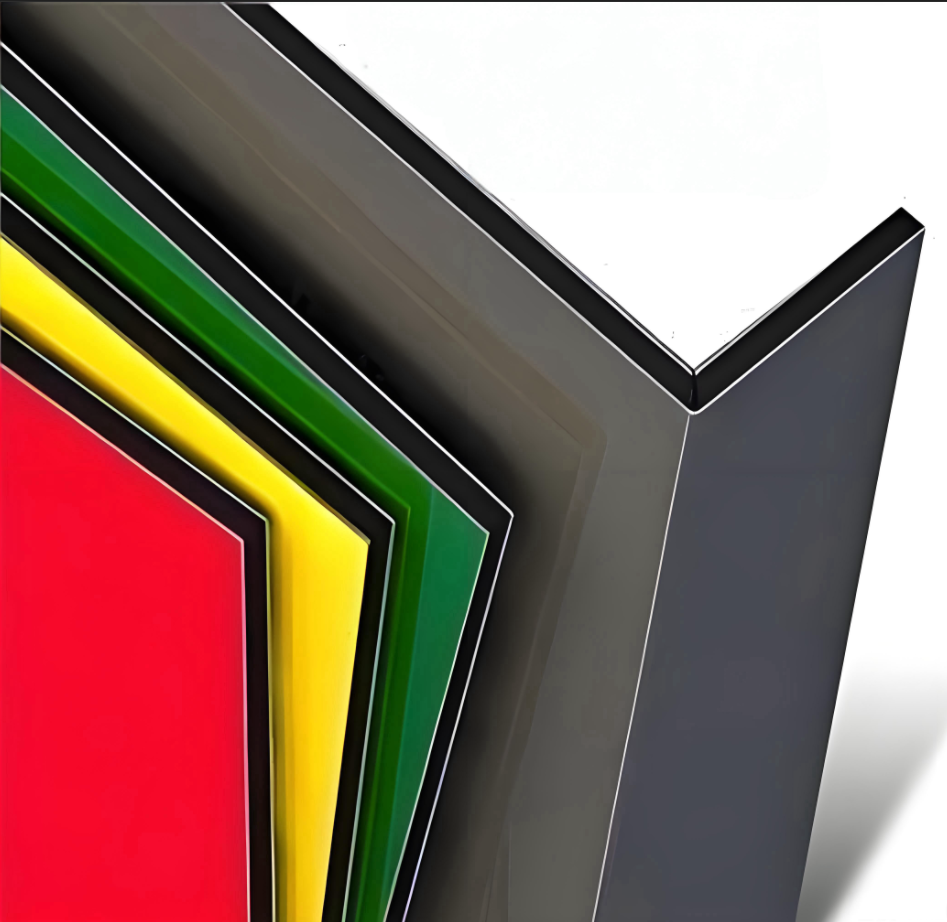
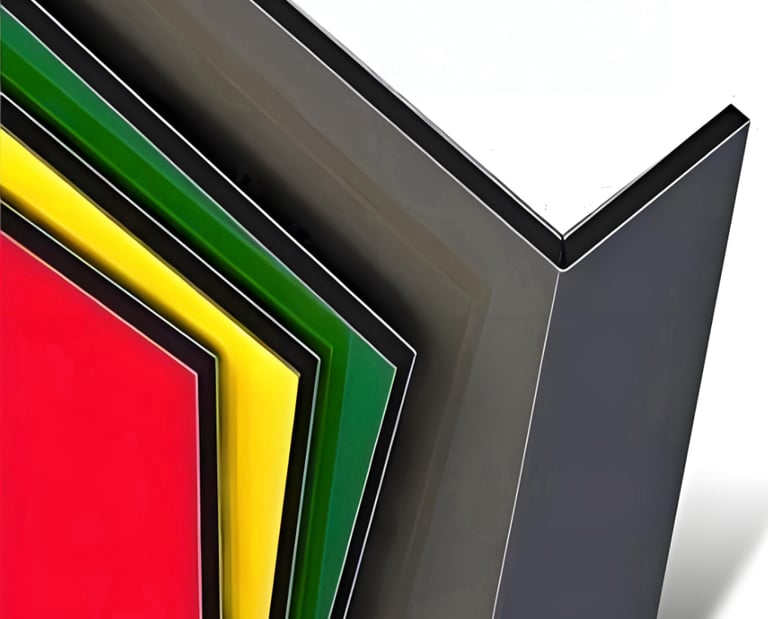
Aluminum solid panel cladding
ACP panel cladding
Contact
Reliable aluminum solutions for your projects
Phone
+86-166 7533 2061
© 2025. All rights reserved.